BASI REVOLT: THE FULL STORY
(Note: I copied this from a student collection that was probably copied from the municipal library. But the original copy that is supposed to be in the library does no longer exist so I could not acknowledge the author. Whoever was the author, please come forward, with your proof. )
The Basi Revolt started in Piddig in September 1807. The revolt was caused by the Spanish prohibition of the production of sugarcane wine called basi. In 1782, there was monopoly of tobacco. It put the sale, traffic and manufacture of tobacco under government control. The Spanish authorities regulated the processing of tobacco leaves into cigars, cigarettes, and their retailing to customers. The colonial authorities in Manila made it a revenue-earning measure and in the provinces local officials saw it as an opportunity for self-enrichment because tobacco was a major source of income.
http://adventuresofabeautyqueen.files.wordpress.com/2009/10/291_0066.jpg
Like the tobacco monopoly, the wine monopoly prohibited the manufacture, traffic and sale of the wine except by those authorized by the government. In effect, this meant the prohibition of their homemade basi. Basi is a liquor fermented from sugarcane juice and has a ritualistic function. Basi was part and parcel of Ilokano natives rites of birth and death, love and marriage, victory and defeat. The abolition of the basi-making meant to the people of Ilocos the abolition of their way of life.
A degree of specialization in trade and industry was developed in each town during this period and Piddig was the center of basi making. During the wine monopoly, Piddig was the hardest hit town. It is located in the eastern part of Ilocos Norte. The natives drew their livelihood from home made basi. Piddig is 100 meters above sea level, surrounded by a chain of hills. It is called “pidipid” meaning united or close to each other .In the older days, frequent tribal wars broke between villages. In order to fortify their defenses, the people stayed close to each other to discourage attacks from other belligerent tribes. When the Spanish colonizers came, they changed the name of the town to Piddig.
The involvement of Piddig with basi dates back to the pre-hispanic times. This town is given the honor of having invented the inimitable red wine called basi. The basi produced by the native Piddigueños, especially when aged, can compare to the taste of an imported whisky. When the Spaniards discovered that the tastiest basi came from Piddig, they came for the sheer pleasure of getting drunk. But the wine makers were deeply angered by the prohibition of basi making instituted by the Spanish authorities.
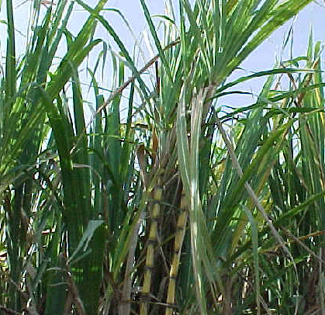
Sitio Calanasan in Piddig was one which engaged in bootlegging. Under cover of darkness, the Tinguians would harvest the sugar cane in the brewing of basi. They did this because they were alredy prohibited from making basi. The wine makers Juan Barroga and Nicolas Simon, headed the operation with the support of a cabeza de barangay named Pedro Mateo. Nicolas Simon’s basi was the tastiest wine in town. He perfected the art of ageing basi. He would bury the brew in the ground and cover it with burned leaves of sugar cane and coconut and sprinkle it with ashes to keep the earthen jars warm and safe from preying eyes of the spies and suspicious town officials. Often times, Pedro Mateo and a few trusted friends would come by night to savour the wine of Nicolas Simon.
http://www.tajagroproducts.com/images/NEW%20FILE%20IMAGES/reeep07_sugarcane325.jpg
Pedro Mateo y Apostol was a mestizo member of the town elite, the principalia. He was married to Juana Manuel y Guillermo. At 40 years old, the cabeza was known as an educated man and a ranking citizen of Piddig. Mateo was seldom in agreement with his fellow officials in the way they treated the natives. During his term a s town chief. He was convicted for physical injuries against Mariano Estavillo, also of Piddig. On March 4, 1875, he got involved in a duel with someone in Sarrat. Both were wounded and upon investigation, Pedro Mateo was set free. Two months later, Mateo again figured in a homicide case after coming from the hut of Juan Barroga. Mateo and two of his Tinguian friends, Dodoc Macag and Salin were joined by a mestizo, Jose Narciso. When the group ran out of basi, they agreed to look for more wine ikn the house of Agustin Domingo in nearby Nagtaruna. Barroga and the two Tinguian friends took separate route from Mateo and Narciso. When the two groups got near each other, Narciso without provocation, pulled out his dagger and stabbed Mateo three times, injuring his fingers. Mateo hit back at Narciso with a dagger, killing him instantly. The nest day, Mateo faced trial in the Municipal Hall of Piddig. He pleaded self-defense. The municipal judge, Jose Mariano Cubillas, sentenced Mateo to five years imprisonment. Mateo’s lawyer, Don Joaquin Bernardo, filed bond of release amounting to 200 pesetas and asked for a royal pardon. His petition was granted after the family of the deceased accepted the petition. For unknown reasons, the case was elevated to the Supreme Court in Manila on March 4, 1800. Sensing that higher officials had become suspicious of his anti-government learnings, Mateo told his Tinguian friends in Sitio Calanasan that in case he gets arrested again, they must prepare to help him escape to the mountains. The mountain ranges of Piddig were the refuge of deserters from the colonial army
After studying Mateo’s application for pardon, Fiscal Nicolas Jonas de Aranas of the Supreme Court in Manila declared that only the Higher Court gives royal pardon. In May of 1802, a development changed the course of Mateo’s fate. Rumors of a second British invasion spread throughout the islands. General Mariano Fulgeras ordered the fortification of Manila and recruitment of all males into military service. The single males in Piddig quickly took flight to the mountains to avoid being drafted. Thus the authorities drafted married males. Unmarried females who know how to use guns also took to the mountains.
On July 28, 1802, Mateo’s pardon was declared null and void. The authorities ordered his arrest and seizure of his properties. Don Juan Francisco and Jose Jorge, friend of Mateo, told the Tinguians, Dodoc Macacag and Salin, that their cabeza was being hunted by the authorites in Vigan. In early September, the officials seized the Riceland of Mateo in the sitios of Pinsad, Binamangan, Otoi and Calso, and placed his family under close guard. His belongings were also confiscated by the police who searched his house. Papers which contained the names of his group and their plans were also discovered. Mateo’s political activities were finally confirmed. One of the confiscated documents contained the layout of an orchard where jars of basi were buried and stored for commercial purposes.
The battle lines between Mateo and the colonial government were clearly drawn. The cabesa from Calanasan was now considered enemy of Spain. The political activities of Mateo had been underplayed in the friar’s account. Mateo was refereed to as convict for homicide. His role in the rebellion was kept secret because his political metamorphosis from cabeza to a rebel leader was a source of embarrassment to the colonial authorities. This is on of the reasons why the basi Revolt was called the “Alzamiento de Ambaristo” by the Spaniards to undermine the role of Pedro Mateo as the rebellion’s master strategist.
Years before Mateo sought refuge in the wilderness of the Cordilleras, the mountains northeast of Piddig became the abode of deserters from the colonial army who organized themselves into terrorist groups who engaged in hit and run raids of the houses of the Spaniards and native elite to avenge the injustices they suffered in the hands of the ruling class.
From these groups of deserters rose a native leader named Salorogo Ambaristo, the son of a mestizo from Laoag and a Tinguian woman. Known a s a man of few words and a hardened fighter, he was not afraid of the guard of the estanco (government store) whom he held responsible for the death of his wife. However, Ambaristo killed the two guards and fled to the mountains. His assault against the Spaniards were matters of personal vengeance only.
Then he heard the name of Pedro Mateo, an “escaped convict” who was also roaming in the Cordilleras and propagating a movement to establish a Filipino government. One day the fiery Tinguian met the convicted cabeza from Piddig and the two formed a pact to organize a resistance movement against the colonial authorities and their puppets. Mateo was educated while Ambaristo is unlettered. So Mateo became the leader and strategist Ambaristo was his right hand man.
From 1805 – 1806 there was drought in the Ilocos causing no harvest in the rice fields. The people suffered from hunger and their hardships were compounded with the monopoly of the tobacco and wine. The people were restless and Mateo took advantage of this crisis by sowing the seeds of discontent among the people. In July 1807, about 40 draftees escaped to the mountains of Piddig bringing with them guns and muskets they stole from the Vigan garrison. Mateo and Ambaristo sent a strike force to attack the town of Sarrat with some rebels but were not able to make it. Instead they brought with them the drums they captured from the guardhouse. The priest mobilized a group of natives to recover the drums and was able to get them.
On September 16, 1807, the rebels from Piddig set out for a second attack on the town of Sarrat after two months of secret preparation. A woman overheard the the plan through one of the rebel’s emissaries. She informed the parish priest, Fray Jose Nieto, who informed the authorities and advised them to set up a guard house at the entrance of the town. The rebels entered the town at 10:00 AM to 11:00 AM but they were repulsed at the main gate. By this time they were able to destroy the guardhouse, taking with them the drums. The rebels marched back to Piddig to join their comrades. Under Mateo’s command they burned and sacked the estanco, killing several guards. They killed some Spaniards and threatened to burn the houses of those who refused to join their ranks. After a week the rebels stormed the town of Sarrat. Pedro Mateo with a band of 40 draftee-deserters and some new recruits captured the town in one full sweep, killing all the guards and principales. Their victory in Sarrat moved the people to join and rally behind them for a cause which was the monopoly and prohibition of wine making out of sugarcane juice. The Friar Curate of Sarrat, Fray Jose Nieto fled to Batac to warn Fray Antonio Abella of the advancing rebel forces. The priest of Batac exhorted the principales to use all their power to force the masses to resist the rebels. The principales accepted the challenge and organized a defense force of 3,000 men. They were bribed with money, food and provision before they agreed to help.
After capturing the town of Sarrat, the rebels split into two groups. Mateo’s group headed for Laoag and attacked the town from the east while Ambaristo headed towards Paoay. Knowing that they would meet strong resistance in Laoag, the rebels decided to capture the smaller towns first and left Laoag for a while. The Mayor of Laoag, Miguel delos Reyes, wrote a letter to the Mayor of San Nicolas, Juan Madamba, and also the Mayor of Batac, Don Vicente Sabas, informing them that the rebels had reached Laoag. Some 350 natives and principales of Batac rushed to San Nicolas. But upon learning that that the rebels in Laoag outnumbered them, the retreated back to Batac.
The priest of Batac, Fray Antonio Abella, called for the mayor of the native elite. If San Nicolas would fall (and it did), the town of Batac could be fortified by destroying the Garasgas bridge which is the point of entry to Batac. The government forces were able to plot the movements of the rebels because they captured one of Mateo’s men sent to a reconnaissance mission to San Nicolas. Fray Antonio Abella together with two secular priests, Don Agustin Maria Albano, and Don Jose Ascano, and a few chieftains and their men headed for the bridge. At the last hour, the companions of Abella backed out. They continued to blow up the bridge but moments before they were able to do it, the rebels descended from the hills of nearby Billoca. The terrified friar quickly mounted his horse and sped away. His companions were saved by joining the rebels. The governor then sent troops under Captain Julio Mercado, so the rebels returned to San Nicolas.
In Paoay, the elites were able to bribe 700 natives to fight against the rebels. All possible entry points to the town were sealed and destroyed and cannons were positioned at the town main entrance. However, the town officials were encouraged by the though that artillery support was on its way from Vigan, so they had to move.
At 4:00 in the afternoon of September 17, 1807, Mateo’s son entered Paoay and before night set in, they were able to subdue the towns defense forces east of Batac, where thwy were joined by their comrades from Dingras who had previously captured the twon of Batac. After capturing Paoay, Ambaristo and his men attack Laoag from the south as they had earlier planned. People were fleeing hysterically in all directions. The rebels killed every Spanish and town official they saw. Their houses were burned and their wives and children slain. By this time, the continuing victories of the rebels sent shockwaves throughout Ilocos. Shouting the cry of rebellion, they called on the masses to free themselves from “domination”
On September 19, 1807, the combined forces of Mateo and Ambaristo left Laoag and headed for Batac of September 22, 1807. at 10:00 in the morning. Fray Antonio Abella led a defense force composed of patrol guards, several mestizos and natives. Despite a well-prepared defense force, the ill-equiped rebels promptly took possession of Batac. Along the way they were able to stir up local support from each town they passed. The town Mayor Don Juan Vicente y Sabas and his son deserted the government forces and joined the rebels. The rebels ransacked the church, killing all the patrol guards and Several Spaniards who were staying in the court of justice.
Emboldened by their continous success, the rebels made Piddig, Sarrat, Laoag and Batac their bases of operation and planned the final attack in Vigan.
When Batac was captured on September 22, 1807, they marched toward Badoc. Two platoons of patrol guards and troops of soldiers under the command of Lt. Escobar met them in Badoc River. The sight of the multitudes of men frightened the Spanish soldiers and so they offered little resistance. By September 23, the rebels completely routed the town of Badoc. They became more and more victorious so they continued to thrust further south.
They gained prestige I every town they passed by, recruiting more members to their ranks. Those who resisted were put to death.
The rebels during those days were not aware that they should have a complete occupation of the towns they conquered. They just passed over every town offering no resistance and then proceeded to the other towns leaving no occupation forces behind.
After the fall of Badoc, Ambaristo and Mateo decided to split in two groups. Ambaristo returned to Paoay to monitor the rebel movements in the northern towns while Mateo proceeded to the towns of Sinait, Cabugao, San Juan and Magsingal with almost no resistance as the Spaniards and the town elite had all fled to Vigan.
While the rebels were rusthlessly pillaging the northern towns the provincial governor was quietly preparing his defense strategies. He mobilized a mixed contingent of loyalists, mestizos, and conscripts from the nearby towns of Santa, Narvacan, Sta. Maria and the southern provinces of Pampanga to help Vigan’s regular forces. Men of the governor told him that there were some 14,000 rebel forces going to Vigan.
On the morning of September 28, 1807, the governor divided his defense forces into platoons and deployed them by the banks of the Bantaoay River in San Ildefonso, two towns away from Vigan. He knew that the deep waters of Bantaoay would be a natural barrier to the advancing rebels and would slow down their advance for Vigan. Aware that Mateo’s men were crudely armed with bolos, spears, bows and arrows, and a few guns, the governor emptied Vigan’s arsenal and armed his men to the teeth.. A musket for each soldier and six canons. He figured that Bantaoay River was the best site for an offensive since it was the only possible route they would take before reaching Vigan. Mateos strategy was to encircle Vigan by deploying his men in San Vicente and in Pandam, a barrio of Caoayan, with the rest of his men attacking the mestizo River.
“Away with the Spaniards” was the rebels’ battle cry as they marched towards Vigan to the loud beat of drums. There was talk of proceeding to Manila to liberate theCapital City and the whole archipelago from the yoke of foreign dominations.
Upon reaching the banks of the Bantaoay River, they started to wade across the river. At midstream, the provincial governor signaled his troops to fire, and bullets poured into the rebels.
Hundreds were killed and their bodies floated on the river which turned red with blood. It was simply a victory of superior arms.
When words reached Ambaristo in Paoay that Mateo’s men were massacred and that Mateo himself was captured by the governor’s forces, he went to launch his final battle. On September 30, Ambaristo and his men attacked Paoay again, killing many people especially the town’s elite and the servant of the priests.
Finally, Ambaristo’s men were subdued by the dragoness (Special Forces) who came from Vigan and Manila. Taken captive was Ambaristo who was brought to Vigan and put in the same jail cell with Pedro Mateo.
Governor General Figueras in Manila ordered an investigation on the cause of Ilocos uprising.. On October 3, 1807, the investigation and trial of the captured rebels began. The leaders firmly stood their grounds, refusing to admit their guilt. Pedro Mateo refused to answer any of the investigators’ questions. The leaders however, were pronounced guilty of the crimes of sedition and rebellion. Despite protestation of innocence, Mateo and Ambaristo were meted the ultimate punishment of death by hanging.
The execution was carried out at daybreak in the public plaza of Vigan to discourage the natives from engaging in the future revolts.
The Basi Revolt was the first of the series of revolts occurred in rapid succession in Ilocos at the beginning of the 1800 (19th century). The second was that of 1811 when the natives took up arms in defense of their newly found religion, having Long-ao its chief god. This spread to the mountain district of Cagayan. The third was in 1815 when about 1,000 Ilocanos took arms in protest against the abolition of the Spanish constitution of 1812, which they believe would relieve them of their obligation to labor in public works on the principle of equality (Sarrat rebellion).
Although these revolts or uprisings were unsuccessful, they became inspiring episode in the Ilocano struggle for freedom. It was not after 81 years later, in 1898, that the Ilocanos openly took up arms again in rebellion. This time they were not alone. All throughout the country their brother Filipinos took up arms for the final struggle that would at long last, free their motherland from 300 years of Spanish bondage. This national uprising known as Katipunan revolution went on into the early 1900 when the Filipino freedom fighters fought against the Americans











1 comments: